Choosing the right automatic transmission for your classic car or hot rod project is one of the most critical decisions you’ll make. It’s the heart of your drivetrain, dictating everything from performance feel to long-term reliability. The debate between the legendary Powerglide and the versatile TH350 is a classic one, and understanding the nuances of each can save you from costly mistakes and ensure your build drives exactly how you envision. This guide will cut through the noise to help you decide which transmission is the right choice for your specific needs and goals.
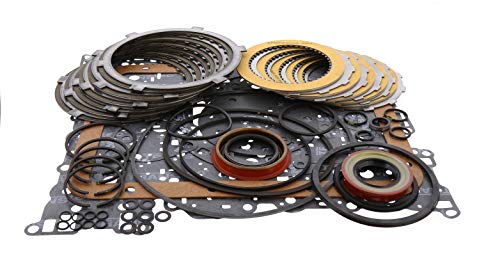
Whether you’re building a dedicated drag racer, a smooth cruiser, or a street-and-strip warrior, the transmission you select will define the character of your vehicle. I’ve spent countless hours under cars and talking with builders to understand the real-world strengths and compromises of these two iconic GM transmissions. By the end of this comparison, you’ll have a clear picture of which unit aligns with your horsepower, driving style, and budget, empowering you to make an informed and confident decision for your project.
Powerglide vs. TH350: Which automatic transmission is the right choice? Review – Quick Verdict
After extensive research and hands-on experience with both transmissions in various applications, my quick verdict is this: the TH350 is the superior all-around choice for the vast majority of street-driven performance and mild street/strip vehicles. Its three-speed design offers a much more usable and enjoyable driving experience on the street compared to the two-speed Powerglide. The TH350 provides better acceleration from a stop, more responsive part-throttle driving, and generally feels more modern and connected to the engine’s power band. For a typical small-block or even a stout big-block build that will see regular street use, the TH350 is almost always the right answer.
However, the Powerglide earns its legendary status in one specific arena: all-out, high-horsepower drag racing. Its simplicity, incredible strength in a properly built unit, and consistent shift points make it the gold standard for dedicated race cars where the only goal is to get down the quarter-mile as quickly and reliably as possible. For a street car, though, its lack of a first gear can feel lethargic and unengaging. Ultimately, your choice hinges entirely on your vehicle’s primary purpose.
Pros
- Extremely strong and reliable when built for high-horsepower drag racing applications.
- Simple two-speed design means fewer potential failure points and consistent performance.
- Excellent for maintaining traction and consistency with brutal torque and power.
- Lightweight compared to many three-speed automatics.
Cons
- Only two gears leads to poor street manners and sluggish feeling acceleration from a stop.
- The large RPM drop between gears can be harsh on street-driven engines.
- Often requires a high-stall torque converter to be effective, which hurts street driveability.
- Not ideal for vehicles that will see frequent stop-and-go or highway driving.
Check on Amazon
Powerglide vs. TH350: Which automatic transmission is the right choice? Overview
The Powerglide and TH350 are both rear-wheel-drive automatic transmissions born from General Motors, but they represent different philosophies. The Powerglide is a two-speed automatic introduced in the early 1950s, famed for its almost indestructible nature in stock form for mild engines and its later dominance in professional drag racing. Its entire operation revolves around a low gear and a direct 1:1 high gear, making it incredibly simple. The TH350, introduced in the late 1960s, is a three-speed automatic that was the workhorse behind millions of GM performance and passenger cars. It offers a traditional gear spread: First, Second, and Third (overdrive was the domain of the later 700R4 and 4L60).
This product comparison is designed for automotive enthusiasts, restorers, and hot rod builders who are at the crossroads of selecting a transmission for their project. It’s for anyone who has heard the names “Powerglide” and “Turbo 350” thrown around at car shows or online forums and needs a clear, practical breakdown of where each excels and falls short. Key details to consider are your engine’s torque output, your vehicle’s weight, rear axle gear ratio, and—most importantly—how you genuinely plan to drive the car. A mismatched transmission can turn a dream build into a frustrating experience.
Specifications matter, but the driving experience matters more. A TH350 has a steeper First gear ratio (around 2.52:1) compared to a Powerglide’s “Low” gear (around 1.76:1 for the common “big-spline” units). This numerical difference is the heart of the debate: that deeper first gear multiplication in the TH350 makes the car feel much more lively off the line. Understanding these core design differences is the first step to making the right choice for your unique combination.
See Full Details on Amazon
Key Features & Performance
To truly understand which transmission is right for you, we need to look beyond the basic gear count and examine the key features that define their performance and character in the real world. From street cruising to launching at the strip, these design elements directly translate to how your car will feel and function.
Gear Ratio Spread and Street Manners
This is the single most important differentiator. The TH350’s three-speed design provides a much more natural and usable gear spread for street driving. Starting in a deep First gear (2.52:1) gives strong initial acceleration. The shift to Second (1.52:1) is well-spaced, keeping the engine in a good power band, and the move to Third (1:1) is smooth. This makes for relaxed highway cruising and responsive around-town driving. The Powerglide, with its direct jump from a tall 1.76:1 low gear to 1:1 high gear, often feels like it’s starting in “second gear.” This necessitates a very loose, high-stall-speed torque converter to get the engine into its power band off the line, which can make for sluggish, soggy-feeling acceleration in normal driving and excessive heat buildup in traffic.
Strength and Power Handling
Both transmissions can be built to handle serious power, but their paths differ. A stock TH350 is reasonably strong and can handle up to ~400 horsepower with good results. When built with improved clutches, bands, and a hardened input shaft, it can reliably manage 500+ horsepower for street and strip use. The Powerglide, in its stock form for passenger cars, wasn’t particularly strong. However, its simple design has a huge advantage: it has become the standard for dedicated race applications. The aftermarket support for ultra-strong Powerglide components is immense. A fully aftermarket “Glide” with a deep aluminum case, billet internals, and a transbrake is arguably the strongest automatic option for 1,000+ horsepower drag cars because of its simplicity and the massive, robust components that can be fitted inside.
Drivability and Daily Use Potential
If your project will ever see street miles, drivability is paramount. In my experience, a well-tuned TH350 feels at home in a street machine. It downshifts predictably for passing, doesn’t generate excessive heat in traffic with a proper cooler, and pairs well with a wide range of rear axle gears. The Powerglide is notoriously poor in this category. The large gap between its two gears means the engine RPM drops significantly on the 1-2 shift, which can feel jarring and often requires a very steep (numerically high) rear axle gear to compensate, making highway RPMs excessively high and noisy. For a weekend cruiser that might see a few strip passes, the TH350’s dual-purpose nature is a significant benefit.
Aftermarket Support and Cost to Build
Both transmissions have excellent aftermarket support, but for different reasons. The TH350 has vast support for street and mild performance parts. Rebuild kits, shift improvement kits, and bolt-in upgrades are ubiquitous and often very affordable. Building a stout street TH350 is a well-trodden path. The Powerglide’s aftermarket is heavily skewed toward race components. While you can find stock-type rebuild parts, the high-end, ultra-strong parts dominate the market. This can mean building a reliable, street-friendly Powerglide to handle moderate power might have a similar cost to building a TH350, but you’ll still be stuck with the two-speed’s driving drawbacks. For all-out race use, the Powerglide’s specialized parts, though expensive, are considered a necessary investment for consistency and durability.
Buy Now on Amazon
Final Verdict
After weighing all the factors, the final verdict comes down to a clear distinction in intended use. For the overwhelming majority of enthusiasts building a street-driven car, a restomod, or a mild street/strip vehicle, the TH350 is the unequivocally correct choice. Its three gears provide a driving experience that is more enjoyable, more responsive, and better suited to the varied conditions of real-world driving. It can be built to handle substantial power without sacrificing the manners that make a car fun to drive on the road.
I wholeheartedly recommend the TH350 for anyone whose project will spend more time on the street than on a trailer. It is the versatile, sensible choice that delivers performance where it counts for most people. You should only seriously consider a Powerglide if your project is a dedicated, high-horsepower drag car where consistency and ultimate strength at wide-open throttle are the only metrics that matter. For that specific purpose, it remains the king.
Pros
- Superior street drivability with a logical three-gear progression.
- Strong acceleration from a stop due to a deep First gear ratio.
- Excellent aftermarket support for affordable street performance upgrades.
- More compatible with a wider range of rear axle gears for flexible cruising.
- Generates less heat in stop-and-go traffic compared to a high-stall Powerglide setup.
Cons
- Not the absolute pinnacle of strength for 1,000+ horsepower drag-only applications.
- Requires more frequent fluid and filter changes for longevity in high-performance use.
- The lack of an overdrive gear can limit highway cruising comfort (a separate issue from the Powerglide comparison).
In summary, choose the TH350 for its balance, versatility, and street performance. Choose the Powerglide only if you have a single-minded focus on drag strip dominance and are willing to sacrifice every aspect of street comfort and manners for that goal. For 95% of readers, the answer is the TH350.