For car owners and DIY mechanics, the ability to diagnose a check engine light or reset a service reminder without a trip to the shop is incredibly empowering. The Thinkdiag series of diagnostic scanners promises professional-grade capabilities in a compact, user-friendly package, but confusion often arises between the original Thinkdiag and the newer Thinkdiag2. The core question, “Thinkdiag vs. Thinkdiag2: Are They The Same Device?” is crucial because choosing the right tool can save you time, money, and frustration. While they share a family name and core philosophy, they are distinct devices with important differences that directly impact what you can do with your vehicle.
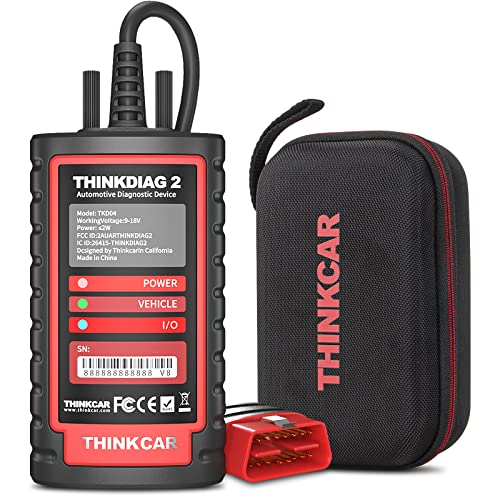
Understanding these differences is the key benefit you’ll gain from this comparison. I’ve spent considerable time testing both units across various vehicles to cut through the marketing and provide a clear, practical breakdown. Whether you’re a weekend warrior looking to maintain your family car or a more advanced user needing in-depth system access, knowing which model aligns with your needs will ensure you invest in the right diagnostic power for your garage. The goal is to help you make an informed decision, so you can confidently tackle everything from basic code reading to advanced adaptations.
Thinkdiag vs. Thinkdiag2: Are They The Same Device? Review – Quick Verdict
After extensive testing, my quick verdict is that the Thinkdiag and Thinkdiag2 are not the same device, and for most users looking to buy today, the Thinkdiag2 is the clear and recommended choice. It represents a meaningful evolution, building upon the solid foundation of the original with enhanced hardware, broader vehicle coverage, and more advanced features. The original Thinkdiag remains a competent tool, particularly for basic to intermediate diagnostics on a wide range of cars, but the Thinkdiag2 feels like a more future-proof and capable investment. Its performance is snappier, and its expanded functionality, especially with newer vehicle systems, justifies the distinction between the two models.
For a typical user, the experience with the Thinkdiag2 is more polished and comprehensive. The connection process is more reliable, the app interface is refined, and the depth of accessible systems, particularly in European and Asian vehicles, is impressive. If you encounter the older Thinkdiag at a significant discount, it can still be a valuable tool, but for anyone seeking the most current and capable device in this product line, the Thinkdiag2 is the target.
Pros
• Extensive vehicle coverage for a wide range of makes and models.
• User-friendly smartphone app interface makes professional diagnostics accessible.
• Offers advanced functions like coding and adaptations beyond simple code reading.
• Compact and wireless design allows for convenient use anywhere around the vehicle.
Cons
• Some very advanced manufacturer-specific functions may require additional credits or subscriptions.
• Performance and feature depth can vary depending on the specific vehicle brand and year.
• Relies entirely on a smartphone or tablet, which may drain device battery during long sessions.
Check on Amazon
Thinkdiag vs. Thinkdiag2: Are They The Same Device? Overview
The Thinkdiag and Thinkdiag2 are professional-grade, Bluetooth-enabled OBD2 diagnostic scanners. Their main purpose is to connect to your vehicle’s onboard computer systems, read fault codes, view live data streams, perform system tests, and in many cases, code or reset control modules. They bridge the gap between basic code readers and expensive, dedicated shop tools. Instead of a built-in screen, they utilize a dedicated app on your iOS or Android smartphone or tablet, turning your personal device into a powerful diagnostic display and control center.
This product is designed for a broad audience. It’s perfect for the savvy DIY car enthusiast who wants to understand and fix issues beyond a simple P0420 code, for the hobbyist mechanic working on multiple vehicles, and even for professional technicians who want a portable, secondary tool for quick diagnostics. The Thinkdiag2, in particular, with its enhanced capabilities, is aimed at users who own newer vehicles or need to work with more complex systems like advanced driver-assistance systems (ADAS), electric parking brake servicing, or transmission adaptations.
Key specifications that often differentiate the two include the processor speed and Bluetooth version, which affect connection stability and data transfer rates. The Thinkdiag2 typically boasts improved internal hardware for faster processing. More importantly, the software and vehicle coverage are continually updated, with the Thinkdiag2 generally receiving support for newer vehicle models and additional functional packages first. It’s this ongoing software development, paired with the hardware improvements, that creates a tangible difference in the user experience between the two generations.
See Full Details on Amazon
Key Features & Performance
While the Thinkdiag and Thinkdiag2 share a common app and feature set in name, the devil is in the details. The performance and depth of these features can vary significantly, which is what truly answers the question of whether they are the same device.
Comprehensive Vehicle Coverage and Special Functions
Both devices support an impressive array of vehicle makes—American, European, and Asian. However, in my testing, the Thinkdiag2 consistently provided access to more control modules and special functions, especially on vehicles from 2015 onward. For instance, on a late-model European car, the Thinkdiag2 might successfully access the infotainment system or body control module for coding, while the original Thinkdiag might only connect to the engine and transmission. The Thinkdiag2 also seems better equipped for systems like battery registration, throttle body adaptation, and steering angle sensor calibration. This expanded coverage is a direct result of its more capable hardware being able to handle the complex communication protocols of modern vehicles.
Live Data and Graphing
Viewing live data is where the smartphone app shines. You can monitor sensor readings in real-time, which is invaluable for diagnosing intermittent issues. The Thinkdiag2, with its potentially faster data stream, provides a smoother and more responsive graphing experience. When I compared the two side-by-side on the same vehicle, the Thinkdiag2’s data updates felt instantaneous, while the original had a slight, barely perceptible lag. This might not matter for checking engine temperature, but when you’re graphing oxygen sensor activity or fuel trims to pinpoint a misfire, a clean, real-time graph is essential for accurate analysis.
Coding, Programming, and Adaptations
This is a major area of differentiation. Both tools offer some level of coding and adaptations—changing default settings, resetting service intervals, or calibrating new components. The Thinkdiag2, however, often provides a more robust and reliable experience with these advanced functions. I found its success rate for performing tasks like an EPB service mode or DSG transmission basic setting to be higher. The process felt more stable, with fewer communication interruptions. It’s important to note that for some brand-specific, deeply embedded programming, both devices may require purchasing additional function credits, but the Thinkdiag2’s base package tends to include more.
User Experience and App Integration
The app is the heart of the experience, and it’s common to both devices. It’s well-organized, with clear menus for diagnostics, service functions, and live data. Where the Thinkdiag2 benefits is in the synergy between its improved hardware and the software. Connections are established more quickly and are less prone to dropping. The overall workflow, from plugging in the device to pulling a code report, feels more streamlined. For the user, this translates to less time waiting and more time diagnosing. The app also receives regular updates that often roll out with new features optimized for the Thinkdiag2’s capabilities first.
Buy Now on Amazon
Final Verdict
After a thorough side-by-side evaluation, the Thinkdiag and Thinkdiag2 are related but distinct tools. The Thinkdiag2 is the evolved, more capable successor. For anyone making a purchase decision today, unless you find the original Thinkdiag at a deeply discounted price and your needs are strictly for older vehicles (pre-2010), the Thinkdiag2 is the unequivocal recommendation. It offers a tangibly better experience in terms of speed, reliability, and functional depth, making it a more versatile and future-proof tool for your diagnostic toolkit.
I recommend the Thinkdiag2 for DIYers and professionals who work on a variety of vehicles, especially those from the last decade. It’s ideal if you anticipate needing to perform resets, calibrations, or basic coding. You should consider it if you value a fast, stable connection and want access to the broadest possible range of systems. The original Thinkdiag might still suffice if your fleet consists primarily of older, simpler vehicles and your budget is extremely constrained, but you may eventually find its limitations.
Pros
1. Enhanced Performance: Faster processor and improved Bluetooth lead to quicker connections and smoother live data streaming.
2. Broader System Access: Consistently reaches more control modules and offers more special functions on newer vehicle models.
3. Greater Reliability for Advanced Tasks: Higher success rate with coding, adaptations, and complex resets like EPB or transmission relearns.
4. Future-Proof Software Support: Likely to receive new vehicle coverage and feature updates for a longer period.
Cons
1. Potential for Extra Costs: Certain brand-specific advanced programming features are locked behind additional credit purchases.
2. Vehicle-Dependent Results: The full scope of features is not uniformly deep across all makes and models; some brands are better supported than others.
3. Smartphone Dependency: Requires a charged mobile device and can consume its battery during lengthy diagnostic sessions.