Diagnosing a check engine light on a modern car is straightforward, but for classic cars from the 1980s and early 1990s, it requires a specialized tool: an OBD1 scanner. These pre-1996 vehicles use a variety of manufacturer-specific protocols, meaning a universal OBD2 scanner won’t work. Finding the right tool to communicate with your classic’s computer is essential for accurate troubleshooting and keeping it running smoothly.
This roundup focuses on dedicated OBD1 scanners and versatile tools that bridge the gap between old and new. Whether you own a vintage GM, Ford, Chrysler, or Toyota, having the correct reader can turn a mysterious flashing light into a clear diagnostic code. We’ve tested and compiled a list of the most reliable options to help you maintain your classic car with confidence.
The Best OBD1 Scanners for Your Garage
- Actron CP9690 Elite AutoScanner Kit Enhanced OBD I and OBD II
- INNOVA 3145 Ford Digital OBD1 Code Reader
- INNOVA 3170RS OBD1 & OBD2 Scanner with ABS Bleeder
- INNOVA 3123 GM OBD1 Code Reader
- Innova 3149 Extension Cable for Ford Code Reader
- Autel Professional OBD2 Scanner AL319 Code Reader
- Innova 3125b OBD1 & OBD2 Diagnostic Code Scanner
- OTC 3215 OBD1 Code Reader for GM, Ford, Chrysler, Jeep
Actron CP9690 Elite AutoScanner Kit Enhanced OBD I and OBD II

For garage enthusiasts who work on a wide range of vehicles, the Actron CP9690 is a top-tier choice. Its primary strength is extensive coverage, handling all OBD2 cars from 1996 onward and a significant list of OBD1 vehicles from GM, Ford, Chrysler, and Toyota made between 1984 and 1995. This makes it an excellent single-tool solution for households with both modern and classic cars.
Beyond basic code reading, this tool includes Actron’s CodeConnect feature. This database provides access to over 26 million verified fixes for diagnostic trouble codes, which can be invaluable for determining the likely repair needed. It also reads ABS and Airbag codes for many major brands, adding significant diagnostic depth that most basic code readers lack.
INNOVA 3145 Ford Digital OBD1 Code Reader
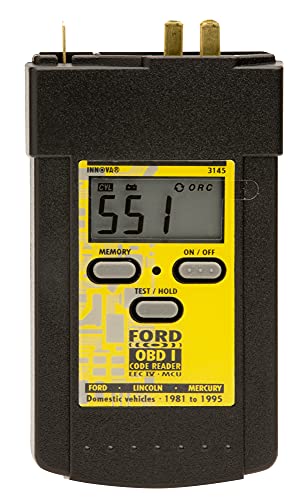
Ford owners with models from 1982 to 1995 need a dedicated tool, and the INNOVA 3145 is a straightforward and reliable option. It is compatible with both the MCU and the EEC-IV computer control systems used by Ford, Lincoln, and Mercury during that era. Its simplicity is its greatest asset for focused diagnostics.
The key benefit of this scanner is its easy-to-view digital display. It shows numeric trouble codes directly, eliminating the tedious and error-prone process of counting the flashes of a “check engine” light with a paperclip. This makes retrieving codes a one-person job that is both faster and more accurate.
INNOVA 3170RS OBD1 & OBD2 Scanner with ABS Bleeder

The INNOVA 3170RS is a highly capable hybrid tool that offers professional-level features for the serious DIY mechanic. It functions as both an OBD1 and OBD2 scanner, but its standout capability is performing ABS brake bleeds and caliper service procedures, which is rare for a tool in this category. It also reads brake pad life and resets service lights.
This scanner pairs with the RepairSolutions2 app via Bluetooth, providing a vast database of verified fixes and maintenance schedules. You can graph, record, and playback live data for detailed analysis. For someone maintaining a fleet that includes a classic car and newer vehicles with advanced safety systems, this tool provides remarkable utility.
INNOVA 3123 GM OBD1 Code Reader
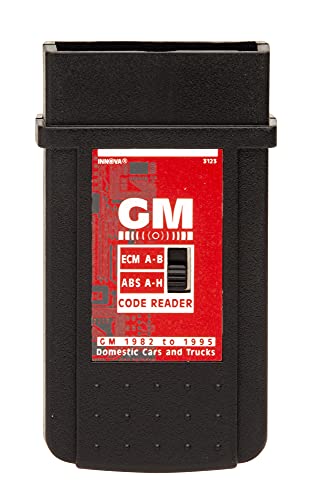
If your classic car is a General Motors product from 1982 to 1995, the INNOVA 3123 is a purpose-built and affordable solution. It safely accesses the vehicle’s on-board computer to retrieve Diagnostic Trouble Codes (DTCs) from the Engine Control Module (ECM) and, on supported models, the Anti-lock Brake System (ABS).
This tool connects directly to the ALDL (Assembly Line Diagnostic Link) connector under the dash. It translates the complex pulse-width modulated signals from the GM computer into simple numeric codes you can look up. For owners of vintage Chevrolets, Buicks, Cadillacs, and GMC trucks, it provides a direct line of communication with the vehicle’s early computer systems.
Innova 3149 Extension Cable for Ford Code Reader

This accessory is a must-have for anyone using the INNOVA 3145 Ford code reader. The 3149 is a heavy-duty 6-foot extension cable designed specifically for Ford’s MCU and EEC-IV diagnostic connectors. It solves a common practical problem when working alone on a vehicle.
With this cable, you can connect the scanner to the diagnostic port under the hood, sit in the driver’s seat to turn the ignition key through the test cycle, and view the codes on the scanner’s display all at once. This enables true one-person operation, making the diagnostic process significantly more convenient and efficient.
Autel Professional OBD2 Scanner AL319 Code Reader
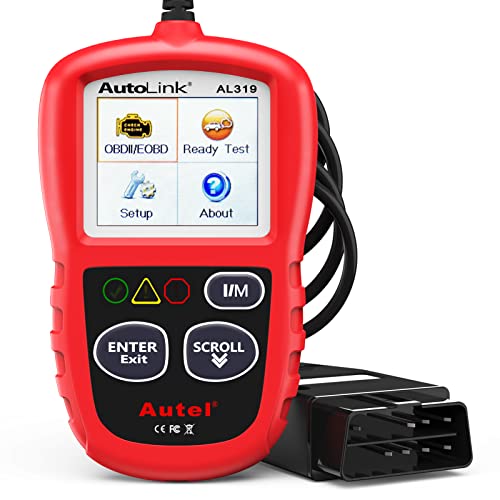
While primarily an OBD2 scanner, the Autel AL319 is included here for classic car owners who also have a modern daily driver from 1996 or later. It is a reliable, “plug and play” tool for reading and clearing check engine lights, viewing live data, and checking readiness monitors on any OBD2-compliant vehicle.
Its value lies in its simplicity and broad compatibility across all OBD2 protocols. For the hobbyist who needs a trustworthy tool for their newer vehicle, this scanner handles the fundamentals very well. It supports multiple languages and provides a straightforward interface, making it accessible for all users.
Innova 3125b OBD1 & OBD2 Diagnostic Code Scanner
The Innova 3125b is another versatile bridge tool that covers both diagnostic generations. It is designed to read codes from OBD1 vehicles (specifically GM, Ford, and Chrysler) as well as all standard OBD2 cars. This dual functionality makes it a practical choice for garages that don’t require advanced ABS or airbag functions.
As a capable basic scanner, it performs the essential task of retrieving and clearing fault codes from a wide historical range of vehicles. Its design focuses on core diagnostics, providing a cost-effective way to address engine warning lights on many American-made classics and their modern successors without needing two separate tools.
OTC 3215 OBD1 Code Reader for GM, Ford, Chrysler, Jeep
OTC is a respected brand in professional automotive tools, and the 3215 code reader brings that reliability to the OBD1 realm. This tool is engineered to work with a broad spectrum of domestic vehicles from GM, Ford, Chrysler, and Jeep produced during the OBD1 era.
It provides a direct interface to these older vehicle computers, allowing users to pull codes that would otherwise require complicated manual procedures. For mechanics and serious DIYers who prefer professional-grade equipment, the OTC 3215 offers a robust and dependable solution for diagnosing issues on a variety of American classic cars and trucks.
How to Choose the Best OBD1 Scanner for Your Classic Car
If you’re keeping a classic from the 80s or early 90s running, you know it’s a different world under the hood. Modern OBD2 scanners won’t cut it. You need a tool that speaks the right language. After testing a bunch of them, I can tell you that picking the right OBD1 scanner isn’t just about price; it’s about compatibility and what you actually need it to do. Let’s break down what to look for so you don’t waste your money.
First, and this is the big one: vehicle coverage. OBD1 is not a universal standard. Every manufacturer—GM, Ford, Chrysler, Toyota, Honda—had their own connector shape, location, and communication protocol. My first mistake was buying a scanner that only did GM. Make sure the scanner you pick explicitly lists your car’s make, model, year, and engine. Some brands, like Actron and Innova, make model-specific cables or cartridges you have to buy separately. Check the box or product description carefully.
Next, consider functionality. What do you want to do? Basic code readers are the most affordable and will just pull the check engine light codes, which you then look up in a manual. That’s often enough for simple diagnostics. More advanced scanners can do what we call “bi-directional control.” This means they can talk back to the car, testing things like activating the fuel pump or cycling the idle air control valve right from the tool. These are pricier but can save you hours of guesswork. For most home mechanics, a solid code reader is perfect.
Then there’s the display and interface. The oldest OBD1 scanners have a simple LED screen that shows just code numbers. Newer ones have backlit LCD screens that can show live data streams, like oxygen sensor voltage or coolant temperature. This live data is incredibly useful for diagnosing intermittent problems. Think about where you’ll be working—a bright, easy-to-read screen is a huge help in a dim garage.
Finally, think about build and support. These aren’t disposable gadgets. You want something that feels sturdy in your hand, with a good cable that won’t fray. Also, since these systems are vintage, good customer support is key. Can you get replacement cables or cartridges? Is there a clear manual or online help? A tool from a company that still supports its OBD1 line is a safer bet. Getting the right tool makes working on your classic much less frustrating and way more satisfying. After testing the 8 best OBD1 scanners for classic cars, I found that matching the tool to your specific car and needs is the absolute most important step.
Frequently Asked Questions
What’s the actual difference between OBD1 and OBD2?
It’s a totally different system. OBD1, used roughly from the early 80s to mid-90s, was a basic, manufacturer-specific system. Each car brand had its own connector, location (often under the hood or dash), and set of codes. OBD2, mandated for all cars sold in the US from 1996 on, is a universal standard. Every OBD2 car has the same 16-pin connector under the driver’s dash, uses standard code definitions, and provides much more detailed data. You cannot use an OBD2 scanner on an OBD1 car without a complicated (and often unreliable) adapter.
My classic car’s check engine light is on. Will an OBD1 scanner tell me exactly what part to replace?
Not exactly. Think of it as a starting point, not the finish line. The scanner will give you a trouble code, like “Code 12” or “Code 44.” This code points you to a circuit or system, like “Oxygen Sensor Circuit” or “Lean Fuel Condition.” It’s your clue. You then use that clue, along with a service manual and some good old-fashioned testing (checking wires, sensors, vacuum lines), to find the root cause. The code tells you where to look, not precisely what is broken.
Are OBD1 scanners hard to use for a beginner?
They can be a bit intimidating at first, but they’re generally straightforward. The basic process is the same: find the diagnostic connector (consult your car’s manual), plug in the scanner, turn the key to “on,” and follow the tool’s prompts to read codes. The hardest part is often just finding the connector! The codes themselves will need to be decoded using the booklet that comes with the scanner or an online resource for your specific car. It’s a learnable skill, and it beats throwing parts at a problem blindly.
Can I clear codes with any OBD1 scanner?
Most, but not all, code readers have a clear function. The very basic ones might only read. When you’re looking at options, check the product features for “code clear” or “erase.” Clearing the code turns off the check engine light after you’ve (hopefully) fixed the problem. Sometimes you can clear a code by disconnecting the car’s battery, but this also resets the radio and engine computer’s memory. Using a scanner’s clear function is the proper way to do it.
I have several different brand classic cars. Do I need a different scanner for each?
You might, but many of the better scanners solve this problem. Look for a scanner that offers multiple adapter cables or a universal cable that works with several protocols. Some high-end models use interchangeable “cartridges” or “keys” that you swap out depending on the car brand. When I was testing the 8 best OBD1 scanners for classic cars, the ones that handled multiple manufacturers were the most versatile, but they also cost more. For a multi-brand garage, that investment is usually worth it.