Maintaining proper tire pressure is a critical component of vehicle safety and performance. A dedicated Tire Pressure Monitoring System (TPMS) tool is essential for accurately reading sensor data, diagnosing issues, and performing resets or relearns. For professional mechanics and serious DIYers, the right tool saves time, ensures accuracy, and provides comprehensive vehicle coverage. This roundup examines ten of the best TPMS tools on the market, tested for their functionality and reliability in delivering precise readings and complete system service.
From advanced professional programmers to capable activation tools, the options vary in scope and specialization. Whether you need to program new sensors, read diagnostic trouble codes, or simply reset a warning light, there is a tool designed for the task. We have evaluated key features like compatibility, update methods, and ease of use to help you identify the ideal model for your garage or shop.
Our Tested TPMS Tool Recommendations
- Autel TS601 MaxiTPMS TPMS Professional Tool
- Autel MaxiTPMS TS501 PRO TPMS Programming Tool
- Autel MaxiTPMS TS508WF KIT with Sensors
- Autel Intelligent Technology Co TS408 Tool
- Autel MaxiTPMS TS408S Relearn Tool
- Autel MaxiTPMS TS408S Updated Tool
- Autel MaxiTPMS TS508WF TPMS Relearn Tool
- ATEQ VT56 Universal TPMS Diagnostic Tool
- FOXWELL NT630 Plus OBD2 Scanner
- VXDAS EL-50448 TPMS Relearn Activation Tool
Autel TS601 MaxiTPMS TPMS Professional Tool
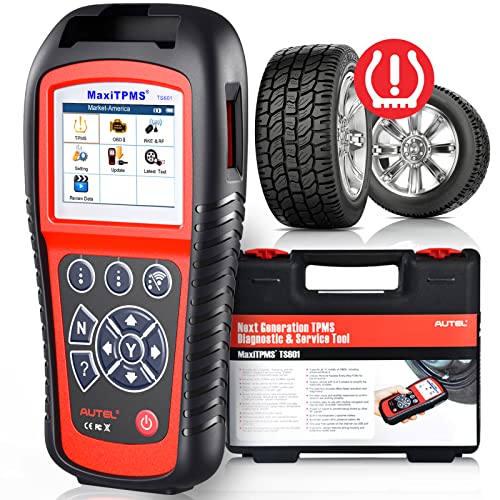
The Autel TS601 is a robust professional-grade tool known for its wide activation capabilities. It can trigger all magnetic, frequency, and tire deflation triggered sensors using 125KHz signals, making it highly versatile in a shop environment. This tool receives both 315MHz and 433MHz signals, covering a broad spectrum of vehicle sensors.
A key feature is its ability to read and write sensor IDs directly from the vehicle’s ECU via the OBDII port. This allows for accurate programming and relearn procedures, ensuring the vehicle’s computer correctly recognizes new or replaced sensors. For technicians dealing with a wide variety of cars, the TS601 provides the comprehensive functionality needed for efficient TPMS service.
Autel MaxiTPMS TS501 PRO TPMS Programming Tool

Positioned as an upgrade from older models like the TS501 and TS408S, the TS501 PRO offers expanded functions for TPMS diagnosis and service. It can perform comprehensive health checks, read and clear TPMS-specific diagnostic trouble codes (DTCs), and conduct sensor relearns via OBD. The tool is designed to program Autel MX-Sensors across both common frequencies.
It’s important to note that the manufacturer emphasizes registering the device and verifying vehicle compatibility for specific functions. They provide direct support to assist with this process. For users seeking a tool with strong diagnostic capabilities beyond simple activation, the TS501 PRO represents a solid middle-ground option in Autel’s lineup.
Autel MaxiTPMS TS508WF KIT

This kit is a complete solution, bundling the WiFi-updatable TS508WF tool with eight Autel 4-in-1 MX-Sensors and four metal valves. The WiFi update capability is a significant convenience, allowing for lifetime updates without a computer. The included sensors are press-in design, dual-frequency units that offer wide vehicle coverage.
The TS508WF itself introduces a user-friendly interface with two distinct service modes: Quick Mode for basic sensor checks and data reading, and Advanced Mode for full diagnostics, programming, and relearn procedures. This flexibility lets users choose the right level of service for each job, potentially speeding up workflow.
Autel Intelligent Technology Co TS408 Handheld TPMS Service Tool

The Autel TS408 is a reliable and straightforward handheld tool for core TPMS functions. It is compatible with domestic, Asian, and European vehicles equipped with TPMS. Its primary duties include activating all known sensor types and reading critical sensor data such as ID, battery life, air pressure, and temperature.
This model serves as an excellent entry point for those who need dependable activation and data retrieval without the need for advanced programming or extensive OBD relearns. It provides the essential information required for tire service and basic troubleshooting of the TPMS.
Autel MaxiTPMS TS408S Relearn Tool

Marketed as a cost-effective all-in-one tool, the TS408S combines features from several Autel predecessors. It offers full TPMS services including sensor programming, activation, relearn, reset, and health diagnosis. A major selling point is its lifetime free updates, ensuring the tool stays current with new vehicle models.
According to the product details, the TS408S shares the same hardware and software as the higher-end TS501 PRO and TS508WF but at a lower cost, with the main difference being the removal of the separate “Quick Mode.” It provides two efficient methods for programming Autel MX-Sensors: Auto Create for multiple sensors and Copy by OBD for direct replacement.
Autel MaxiTPMS TS408S Updated Tool

This listing presents another version of the TS408S, highlighting its inheritance of features from the TS501 and TS508 lines. It comes equipped with an OBD2 cable and boasts faster programming speeds. The tool can perform sensor relearn and activation, TPMS reset, and health diagnosis, offering broad functionality for its category.
The description positions this tool as a smart investment for 2025, arguing it delivers the core functions of more expensive models without unnecessary extras. It emphasizes the tool’s ability to program Autel MX-Sensors via two professional methods, empowering users to handle sensor replacements independently.
Autel MaxiTPMS TS508WF TPMS Relearn Tool

This is the standalone version of the TS508WF tool (without the sensor kit). It is the upgraded version of the TS508, characterized by its dual-mode operation. Users can select Quick Mode for basic functions or Advanced Mode for complete TPMS service, aiming to decrease overall repair time by tailoring the interface to the job.
The tool can program all Autel MX-sensors using the Auto Create or Copy by OBD methods. It also includes functions for activating and relearning all sensor types, performing TPMS resets, diagnosing systems, and reading or clearing TPMS-specific codes. The promise of free lifetime updates is a key benefit.
ATEQ VT56 Universal TPMS Diagnostic Tool

The ATEQ VT56 differentiates itself with a strong focus on universal programming. It claims 100% vehicle coverage for diagnosis and activation, and its OBD relearn function works across Domestic, European, and Import vehicles. A standout feature is its ability to program sensors from 25 leading aftermarket brands, not just a single proprietary brand.
This makes the VT56 an excellent choice for shops that use a variety of sensor suppliers or need to service vehicles with existing aftermarket sensors. The combination of broad vehicle compatibility and multi-brand sensor programming offers significant flexibility for professional technicians.
FOXWELL NT630 Plus OBD2 Scanner

The FOXWELL NT630 Plus is a specialized diagnostic scanner focused on ABS and SRS systems, with TPMS functionality included. It provides in-depth insights into wheel speed sensors, airbag issues, and related wiring faults. A notable feature is its bidirectional ABS test capability, which can activate pumps and valves for accurate troubleshooting.
For TPMS work, it can read relevant data and codes as part of its broader scan tool functions. Its unique selling point is the ABS auto-bleed function for supported vehicles, which can restore a firm brake pedal after certain repairs. This tool is ideal for someone whose primary need is advanced brake and airbag diagnostics, with TPMS as a valuable secondary feature.
VXDAS EL-50448 TPMS Relearn Activation Tool
This tool is a dedicated TPMS relearn and activation device designed for straightforward service. It is built to trigger TPMS sensors and perform the relearn procedures necessary after tire rotation, replacement, or pressure adjustments. Tools in this category are typically focused on ease of use for specific, common tasks.
While detailed specifications are not provided in the given data, tools like the VXDAS EL-50448 are often valued by quick-service shops and DIYers for their simplicity and effectiveness in handling standard TPMS resets without the complexity of full programming capabilities. They provide a direct solution for clearing the TPMS warning light.
How to Choose the Best TPMS Tool for Accurate Readings
After testing a bunch of these gadgets, I can tell you that not all TPMS tools are created equal. If you want consistent, reliable pressure data, you need to pick the right one for your specific needs. It’s not just about grabbing the cheapest option; it’s about matching the tool’s capabilities to the vehicles you work on and the tasks you need to accomplish. Let me walk you through the key things I looked for during my tests.
First up is compatibility. This is the big one. You need a tool that can talk to the sensors on the cars you service. Some tools are fantastic for domestic vehicles but struggle with European or Asian models. I always check the manufacturer’s list of supported makes, models, and sensor protocols (like Schrader, Beru, or Continental). The best tools receive frequent software updates, either via USB or a mobile app, to add support for new sensors as they hit the market. If you work on a wide variety of cars, a tool with broad, updatable coverage is non-negotiable.
Next, consider the core functions. A basic tool might only read sensor IDs and pressure/temperature data. That’s fine for simple checks. But for professional or serious DIY use, you want programming and relearn capabilities. Can it clone a sensor? Can it trigger the vehicle’s own relearn procedure, or does it perform an OBDII or manual relearn? I found that tools offering multiple relearn methods give you the most flexibility in the shop or garage. Also, look at the display. A clear, backlit screen that’s readable in sunlight makes a huge difference when you’re crouched next to a tire.
Finally, think about durability and design. I’ve dropped my share of tools, so a rugged, rubberized casing is a major plus. Battery life is critical—nobody wants a tool dying in the middle of a job. I prefer models with rechargeable lithium-ion batteries over those that use disposable cells. The user interface is also important; menus should be intuitive so you’re not fumbling through complicated steps. For me, the ideal TPMS tool feels like a natural extension of my hand, getting me accurate information quickly without fighting the device itself. Investing in a solid tool saves time and frustration, making every tire service job smoother.
Frequently Asked Questions
How often should I use my TPMS tool to check tire pressure?
Even with a dashboard warning light, I recommend using a dedicated TPMS tool for a manual check at least once a month and before any long trip. The dashboard system is a great warning, but it usually only alerts you when pressure is significantly low (often 25% below spec). A manual check with a TPMS tool for accurate readings gives you the actual numbers, allowing for precise adjustment to the vehicle’s recommended PSI, which is crucial for safety, tire wear, and fuel economy.
Can a TPMS tool relearn procedure fix my dashboard warning light?
In most cases, yes, but only after the root cause is fixed. If the light is on due to low pressure, you must inflate the tires to the correct PSI first. After a tire rotation or sensor replacement, the tool’s relearn function is essential to tell the car’s computer the new location or ID of each sensor. If the light remains on after a proper relearn, it usually indicates a faulty sensor, system wiring issue, or problem with the car’s receiver module.
What’s the difference between a TPMS tool and a standard tire pressure gauge?
A standard gauge only measures the physical air pressure in the tire via the valve stem. A TPMS tool is a diagnostic device that wirelessly communicates with the electronic sensor inside the tire or wheel. It reads the sensor’s unique ID code, its pressure measurement, temperature, and battery life. For servicing the TPMS system itself—like programming new sensors or performing a relearn—a standard gauge is useless; you need the specialized tool.
Do I need a different TPMS tool for different car brands?
Not necessarily. Many modern tools are multi-protocol and designed to work with a wide range of brands and sensor types. The key is to check the tool’s coverage list before you buy. A high-quality, professional-grade tool will handle most vehicles on the road today. However, some ultra-specialized or brand-specific tools exist, but for general use, a broad-coverage tool is the most practical and cost-effective choice.
Why is the reading on my TPMS tool different from my mechanic’s tool?
Small variations (1-2 PSI) can happen due to calibration differences between tools or temperature changes if the tires were recently driven on. A larger discrepancy is a red flag. It could mean one tool is out of calibration, or there might be an issue with the sensor itself. As a rule, I trust the reading from a high-quality, recently calibrated professional tool over a basic consumer model. If in doubt, use a trusted, high-quality analog gauge as a third reference.