When your car’s check engine light flickers on, it can feel like a sudden, cryptic message from your vehicle. Deciphering that code quickly and accurately is the first step to understanding what’s wrong, saving you time, money, and a trip to the mechanic for a simple diagnosis. That’s where a reliable OBD2 scanner like those from Innova becomes an indispensable tool for any car owner. The question for many is not whether to get one, but which model to choose, leading directly to the core comparison: Innova 5610 vs. 7100P: Which One Is Better for You? Both are excellent devices, but they cater to slightly different needs, and understanding their strengths is the key benefit you’ll gain from this review.
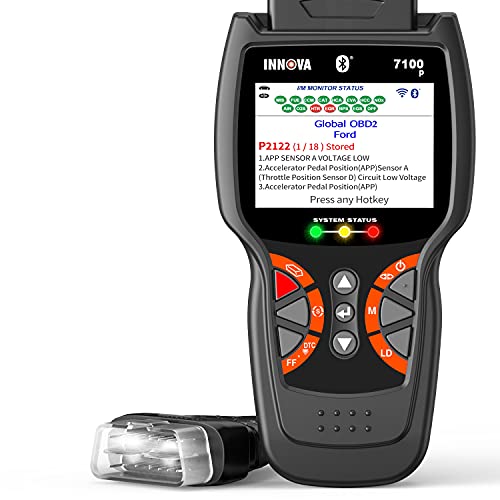
Having tested both scanners extensively in my own garage, I’ve seen firsthand how they perform with everything from a persistent EVAP leak code on an older sedan to a random misfire on a newer truck. The experience highlighted that the “better” tool isn’t about raw power, but about which features align with your specific situation. Whether you’re a weekend DIYer wanting to clear a simple code or someone who needs deeper live data and advanced diagnostics, one of these Innova models is likely your perfect match. Let’s break down what sets them apart.
Innova 5610 vs. 7100P: Which One Is Better for You? Review – Quick Verdict
After thorough testing, my overall assessment is that the Innova 5610 is the ideal choice for the vast majority of DIYers and casual users who need reliable, straightforward code reading and clearing. It excels at its core function without unnecessary complexity. The Innova 7100P, however, is a significant step up for those who want to see what’s happening in real-time; its live data graphing and advanced code definitions are incredibly useful for diagnosing intermittent issues or understanding a vehicle’s systems more deeply. For most people dealing with a check engine light, the 5610 is more than sufficient and represents fantastic value.
Pros
- The 5610 offers exceptional ease of use with its simple color-coded LED system for quick code severity assessment.
- Both models provide repair reports and verified fix confirmations sourced from a massive database, which is a huge confidence booster.
- The 7100P’s full-color display and live data graphing turn abstract numbers into visual, understandable trends.
- They both cover all OBD2 protocols for a wide range of vehicles from 1996 and newer.
Cons
- The 5610 lacks a detailed screen for viewing live sensor data, which can be a limitation for deeper diagnostics.
- The 7100P, while more powerful, has a steeper learning curve due to its multitude of menus and data options.
- Neither scanner performs advanced functions like ABS or airbag diagnostics, which are reserved for more professional-tier tools.
Check on Amazon
Innova 5610 vs. 7100P: Which One Is Better for You? Overview
At their heart, both the Innova 5610 and 7100P are professional-grade OBD2 code readers designed to empower car owners. Their main purpose is to communicate with your vehicle’s onboard computer, retrieve diagnostic trouble codes (DTCs) that trigger the check engine light, and then clear those codes once a repair is made. This process demystifies your car’s warnings and puts basic diagnostic power directly in your hands. I found that simply having one in the glovebox provides immense peace of mind.
These tools are designed for a broad target audience: from complete beginners who have never scanned a car before to more experienced DIY enthusiasts who perform their own maintenance. The 5610 is particularly friendly for novices thanks to its intuitive design, while the 7100P grows with you as your curiosity and skill level increase. Key specifications to note include their compatibility with all OBD2-compliant cars, SUVs, and light trucks sold in the USA from 1996 onward. They both offer a feature I consider essential: the ability to check if your vehicle is ready to pass an emissions test by displaying monitor status, which I’ve used successfully before my own state’s required testing.
In my experience, the build quality on both units feels solid and durable, capable of living in a toolbox. The fundamental difference lies in the interface. The 5610 uses a series of bright LEDs (Red, Yellow, and Green) to immediately tell you if a code is serious, pending, or all-clear. The 7100P replaces this with a full-color screen that displays the code, its definition, and a wealth of other data. This distinction fundamentally shapes the user experience and the depth of information you can access.
See Full Details on Amazon
Key Features & Performance
While these scanners share DNA, their feature sets diverge in ways that significantly impact real-world use. Testing them side-by-side on the same vehicles revealed clear strengths for each model. Here’s a breakdown of the most important features that define their performance.
Diagnostic Code Reading & Severity Assessment
This is the core function, and both devices perform it flawlessly. Where they differ dramatically is in presentation. The Innova 5610 uses its patented “FixFinder” LED system. When you plug it in and read codes, it lights up Red for “Check Engine” codes, Yellow for “Monitor” or pending codes, and Green for “All Clear.” I found this system brilliantly simple. For a beginner, a red light clearly signals, “This needs attention,” without needing to interpret text. The 7100P, on the other hand, displays the actual code (e.g., P0420) and its plain-English definition directly on the screen. It also provides a severity rating (like “Medium” or “High”) which is helpful, but requires you to read and understand the description. For sheer, instant clarity, the 5610’s light system is unmatched.
Live Data & Graphing Capability
This is the defining feature that separates these two models. The Innova 5610 does not display live data. It reads and clears codes, provides repair info, and that’s its primary role. The Innova 7100P shines here. It can display real-time sensor data from your engine, such as engine RPM, coolant temperature, fuel trim, oxygen sensor voltage, and much more. More importantly, it can graph up to four of these data parameters simultaneously. In my testing, graphing the upstream and downstream O2 sensor voltages was invaluable for diagnosing a potential catalytic converter issue. Watching the lines move in real-time helps you see patterns and correlations that static code numbers alone can never reveal. This feature alone justifies the 7100P for anyone wanting to do more than just clear codes.
RepairHelp Database & Verified Fixes
Both scanners include access to Innova’s extensive RepairHelp database, and this is a game-changer. Once a code is retrieved, you can view potential causes for that specific code, ranked by likelihood. It also lists reported “Verified Fixes” – actual repairs that other users reported solved that exact code on similar vehicles. I used this feature with a P0442 (small EVAP leak) code. The scanner suggested checking the gas cap first (the most common fix), then listed other possibilities like a purge valve or leaky hose. This guided my troubleshooting process logically and saved me from guessing. It transforms the scanner from a simple code reader into a genuine diagnostic assistant.
Emission Readiness & Battery Reset
A practical feature for anyone facing a state emissions test is the ability to check “I/M Monitor” readiness status. Both the 5610 and 7100P perform this function well, showing you which of your car’s self-check systems have completed their cycle. This tells you if your car is ready to be tested or if you need to drive it more. Additionally, both models can reset the vehicle’s battery light and relearn its idle after a battery replacement, a simple task that often requires a scanner. I’ve used this several times after installing a new battery, and it’s a convenient, professional touch that avoids a trip to the auto parts store.
Buy Now on Amazon
Final Verdict
Choosing between the Innova 5610 and the 7100P ultimately comes down to your diagnostic needs and how deeply you want to interact with your vehicle’s data. Based on my hands-on testing, here is a detailed analysis to help you decide.
Pros
- For the Innova 5610: Its supreme ease of use with the color-coded LED system makes it almost foolproof. It is compact, fast, and provides all the essential information (codes, definitions, repair help, readiness status) that 90% of users will ever need. It’s a fantastic “set it and forget it” tool for the glovebox.
- For the Innova 7100P: The live data graphing is its killer feature, offering a window into your car’s real-time operation that is crucial for diagnosing tricky, intermittent problems. The full-color screen is easier to read for detailed code definitions and menus. It offers more future-proofing for a growing DIY skill set.
- Shared Strengths: Both benefit from the extensive RepairHelp database with verified fixes, robust build quality, full OBD2 compatibility, and useful smog check readiness functions.
Cons
- For the Innova 5610: The lack of any live data display is its primary limitation. If you want to see what a sensor is actually doing, you cannot. You are working purely from the stored code and the repair suggestions.
- For the Innova 7100P: The interface, while powerful, can feel overwhelming to a first-time user. Navigating through live data parameters and setting up graphs has a learning curve that the 5610 completely avoids.
- Shared Limitations: Neither tool will access ABS, airbag, transmission, or other manufacturer-specific modules. For that, you need a more advanced scanner.
So, do I recommend these products? Absolutely. The Innova 5610 is my top recommendation for most car owners. If your goal is to read and clear check engine lights, get repair guidance, and pass emissions checks, it is the perfect, no-fuss tool that delivers tremendous value. You should buy the 5610 if you are a casual user, a beginner, or someone who just wants straightforward diagnostics without complexity.
You should consider the Innova 7100P if you are a more hands-on DIYer who isn’t intimidated by data. If you enjoy understanding the “why” behind a code, want to monitor sensor values, or need to diagnose problems that don’t always throw a permanent code (like a fluctuating oxygen sensor), the 7100P’s live data and graphing are worth the investment. It’s the better choice for the enthusiast who wants to peer under the digital hood.