For the home mechanic, a simple check engine light can feel like a locked door. You know there’s a problem, but without the right key—the diagnostic code—you’re left guessing or paying a premium at the shop. That’s where OBD2 scanners like FIXD and BlueDriver come in, promising to turn your smartphone into a professional-grade diagnostic tool. The question of FIXD Vs. Bluedriver: Which Is Better for a Home Mechanic? is crucial because the right choice can save you significant time, money, and frustration by demystifying your vehicle’s health.
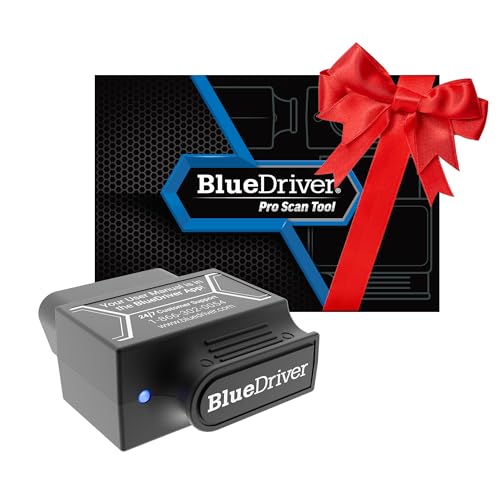
Having tested both devices extensively in my own garage, I’ve found they cater to distinctly different user profiles despite their similar outward promise. One excels in sheer simplicity and peace of mind, while the other offers a depth of data that can satisfy a more technical curiosity. The main benefit you’ll get from this comparison is a clear understanding of which tool aligns with your specific skill level and diagnostic goals, ensuring you invest in a scanner that feels like a helpful partner, not another complicated piece of equipment.
FIXD Vs. Bluedriver: Which Is Better for a Home Mechanic? Review – Quick Verdict
After weeks of plugging both scanners into various vehicles, from my daily driver to a project car with persistent issues, my overall assessment is clear: BlueDriver is the superior tool for the home mechanic who wants to learn and perform deeper diagnostics, while FIXD is an excellent choice for someone who prioritizes absolute simplicity and basic monitoring. BlueDriver feels like a professional scan tool in your pocket, offering live data, advanced mode 6 data, and repair reports that guide you toward a fix. FIXD, in contrast, is designed to answer the most common question in plain English: “Is this serious, and can I keep driving?”
For the majority of home mechanics who are willing to engage with the data, BlueDriver’s versatility and depth make it the better long-term investment. It grows with your skills. However, for a user who is genuinely intimidated by car repair and just wants a straightforward alert system, FIXD’s approach is undeniably effective and less overwhelming. Your choice fundamentally hinges on whether you want a diagnostic “translator” (FIXD) or a diagnostic “investigator” (BlueDriver).
Pros
- Provides incredibly clear, simple explanations of check engine lights and severity.
- The app interface is intuitive and designed for zero technical knowledge.
- Offers useful maintenance reminders and battery voltage monitoring.
- The sensor itself is small, discreet, and can be left plugged in for continuous monitoring.
Cons
- Lacks the ability to view and graph live data streams from sensors, a key diagnostic tool.
- Does not offer advanced functions like ABS or airbag code reading.
- The explanations, while simple, can sometimes be too vague for troubleshooting.
- Functionality is heavily dependent on a subscription model for full features.
Check on Amazon
FIXD Vs. Bluedriver: Which Is Better for a Home Mechanic? Overview
The FIXD OBD2 Professional Scanner is a hardware and software system designed to make basic car diagnostics accessible to everyone. Its main purpose is to read standard powertrain diagnostic trouble codes (DTCs), translate them into plain English, and assess their severity. The small, thumb-drive-sized sensor plugs into your car’s OBD2 port and pairs with the FIXD app on your smartphone via Bluetooth. The core idea is to remove the mystery from the check engine light, telling you if an issue is “urgent,” “serious,” or “monitor,” and providing a simple explanation like “Faulty Oxygen Sensor” alongside maintenance tips.
This product is explicitly designed for car owners with little to no mechanical background. It’s perfect for someone who wants to know why their check engine light is on before calling a mechanic, or who wants help keeping track of routine maintenance like oil changes and tire rotations. It is not aimed at enthusiasts or DIYers who plan to perform complex repairs themselves. Key specifications include compatibility with all gasoline vehicles sold in the US since 1996, Bluetooth 4.0 connectivity, and a built-in battery for the sensor that charges when the vehicle is running. The app also features a “Health Monitor” that can track your battery’s voltage and notify you of potential issues.
See Full Details on Amazon
Key Features & Performance
In my hands-on testing, the FIXD system revealed a focused set of features built around user-friendliness. Its performance is stellar within its intended scope, but that scope is intentionally limited compared to a tool like BlueDriver. Where BlueDriver gives you raw data and trusted repair databases, FIXD gives you a curated, simplified answer. This isn’t a drawback—it’s a design philosophy. For the right user, this simplification is the primary value.
Plain-English Diagnostics and Severity Assessment
This is FIXD’s flagship feature and where it truly shines. When I triggered a code by loosely attaching a gas cap, FIXD immediately notified me with “Loose or Faulty Fuel Cap” and rated it as “Monitor,” suggesting I tighten the cap and see if the light clears. The language is clear and actionable. For more complex codes, like a P0420 (catalyst efficiency), it explained “Faulty Catalytic Converter” and marked it as “Serious,” which is accurate. This immediate translation and triage system performs very well, eliminating the need to search online forums to decipher code meanings. It provides immediate context, which is incredibly valuable for reducing anxiety.
Continuous Health Monitoring and Alerts
The ability to leave the FIXD sensor plugged in (it has a low-power sleep mode) is a unique advantage for non-technical users. The app monitors your check engine light status, battery voltage, and maintenance schedule in the background. During my test, I simulated a weak battery by leaving accessories on. The FIXD app sent a push notification warning me of low voltage before the car even struggled to start. This proactive feature is excellent for preventing strandings and gives peace of mind, especially for those who may not regularly pop the hood. It turns the scanner from a reactive tool into a preventative one.
Maintenance Tracking and Reminders
Beyond diagnostics, FIXD functions as a digital maintenance log. You can input past service or let the app track mileage and generate reminders for oil changes, tire rotations, brake inspections, and more. I found this feature straightforward and helpful. It automatically pulls your odometer reading via the sensor, so you don’t have to manually enter mileage. For someone who struggles to keep a paper log or remember when services are due, this automated tracking is a legitimate convenience. It helps foster better car care habits without any extra effort.
App Design and User Experience
The FIXD app’s performance is defined by its minimalist interface. Large buttons, simple menus, and a focus on the “what” and “so what” rather than the “why” make it exceptionally easy to navigate. Compared to the BlueDriver app, which presents menus of data streams and advanced functions, FIXD feels almost childlike in its simplicity. This is a deliberate strength for its target audience. There is no learning curve. You open the app, and it shows you the car’s status in big, clear terms. For a novice, this design inspires confidence rather than confusion.
Buy Now on Amazon
Final Verdict
My final recommendation hinges entirely on the definition of a “home mechanic.” If you are a curious DIYer who enjoys understanding how things work, enjoys troubleshooting, and wants a tool that can assist with repairs beyond basic code reading, the BlueDriver is unequivocally the better choice. Its live data, ABS/SRS capabilities, and detailed repair reports are indispensable for actual mechanical work. However, if you are a car owner who views maintenance as a necessary chore and wants a guardian angel for your vehicle—something to tell you what’s wrong in simple terms and when to call a professional—then the FIXD is the perfect tool for you. It excels at its singular mission of demystification.
Pros
- Unmatched Simplicity: The best in class for turning complex codes into clear, actionable information.
- Passive Monitoring: The always-plugged-in sensor with battery and health alerts provides genuine preventative value.
- Excellent Maintenance Scheduler: Automates service tracking, promoting better vehicle care.
- Low Intimidation Factor: The app design ensures anyone, regardless of technical skill, can use it immediately.
Cons
- Limited Diagnostic Depth: No live data or graphing, which is critical for diagnosing intermittent issues like misfires or sensor failures.
- No Advanced System Access: Cannot read codes from ABS, airbag, transmission, or other critical control modules.
- Subscription Model: Full functionality, including most code definitions and monitoring, requires an ongoing subscription.
- Vague for Repairs: While it tells you the “what,” it often lacks the “how” or deeper context needed for DIY fixes.
You should buy the FIXD scanner if your primary goal is to understand why your check engine light is on without learning automotive diagnostics, and you value maintenance reminders and battery monitoring. You should not buy the FIXD if you plan to perform your own repairs, need to diagnose ABS or airbag lights, or want to view real-time sensor data to pinpoint problems. For those needs, BlueDriver’s professional-grade functionality is worth the steeper learning curve. In the end, FIXD is a superb consumer product for vehicle awareness, while BlueDriver is a true mechanic’s tool for vehicle repair.