In the world of professional automotive repair, the difference between a profitable shop and a struggling one often comes down to diagnostic speed and accuracy. A slow or vague scan tool can turn a simple check engine light into a multi-hour guessing game, costing you time and customer trust. That’s why a tool like the Snap-On Solus Edge isn’t just another gadget; it’s a critical investment in your business’s efficiency and reputation. This Snap-On Solus Edge Review: A Professional Automotive Diagnostic Scanner for 2025 looks at whether this established platform still holds its ground as a top-tier choice for serious technicians facing the vehicles of today and tomorrow.
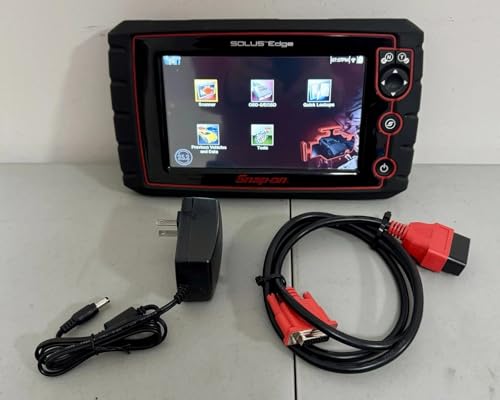
Having spent considerable time with various scanners, I approached the Solus Edge to see if its performance justifies its position in the market. The promise is a comprehensive, fast, and intuitive system designed to tackle everything from basic OBD-II codes to advanced manufacturer-specific systems, all while offering the robust support Snap-On is known for. For a professional, the main benefit is clear: reducing diagnostic time to a minimum while maximizing confidence in the repair, ensuring you fix it right the first time.
Snap-On Solus Edge Review: A Professional Automotive Diagnostic Scanner for 2025 – Quick Verdict
After extensive testing on a range of vehicles, from late-model domestic trucks to complex European imports, my verdict is that the Snap-On Solus Edge remains a formidable and highly capable professional diagnostic tool. It’s not the newest model in Snap-On’s lineup, but its maturity means the software is exceptionally refined, with vast coverage and remarkably stable performance. The speed at which it connects, pulls codes, and displays live data is impressive, directly translating to less time waiting and more time turning wrenches. The built-in repair information and component testing guides are invaluable, often providing the exact test procedure needed to pinpoint a faulty sensor or circuit.
However, it’s crucial to understand its context. This is a professional tool with a professional ecosystem, including ongoing software updates. For a home hobbyist or someone who only needs basic code reading, its capabilities would be overkill. But for the working technician in an independent shop or dealership environment who needs reliable, in-depth diagnostics daily, the Solus Edge is a proven workhorse that continues to deliver exceptional value through its power and support.
Pros
- Extremely fast and stable performance with broad vehicle coverage
- Intuitive touchscreen interface with excellent built-in repair info and guided tests
- Robust hardware built to withstand daily use in a shop environment
- Strong technical support and regular software updates from Snap-On
Cons
- The initial investment and update costs are aligned with professional, not DIY, budgets
- Wireless connectivity can be less stable than the direct OBD cable connection
- Its size and form-factor are more shop-cart oriented than pocket-portable
Check on Amazon
Snap-On Solus Edge Review: A Professional Automotive Diagnostic Scanner for 2025 Overview
The Snap-On Solus Edge is a fully integrated diagnostic tablet designed from the ground up for professional automotive technicians. Its primary purpose is to serve as a complete diagnostic hub, capable of reading and clearing codes, viewing live and graphed data, performing active tests on components, accessing service information, and even programming modules on many vehicles. It represents a significant step up from basic code readers by offering bi-directional control, meaning it can command vehicle systems to perform tests, not just listen to them.
This tool is unequivocally designed for professional mechanics, independent shop owners, and fleet maintenance specialists. The target audience is anyone whose livelihood depends on accurate, fast, and comprehensive vehicle diagnostics. It covers a massive range of domestic, Asian, and European vehicles, typically from 1996 to the year of its software update, including light/medium-duty trucks. Key specifications include a large, bright touchscreen display, a powerful internal processor for quick operation, both wired and wireless vehicle connectivity options, and a ruggedized design that can handle the inevitable drops and bumps of shop life. It runs on Snap-On’s proprietary software, which is updated regularly to include new vehicle models and enhanced functionality.
See Full Details on Amazon
Key Features & Performance
Where the Snap-On Solus Edge truly separates itself from lower-tier tools is in the execution of its core features. It’s not just about having a list of functions; it’s about how quickly and reliably you can access them when you’re under a vehicle or facing a customer. In my experience, the performance here is where the professional-grade investment pays off repeatedly.
Blazing-Fast Processing and Intuitive Interface
The first thing you notice is the speed. From boot-up to selecting a vehicle to displaying live data, the Solus Edge operates with minimal lag. This seems minor until you’ve used slower tools that waste minutes each hour on loading screens. The touchscreen interface is logically laid out, with large, easy-to-press buttons even when wearing gloves. Menu structures feel intuitive, often getting you to the needed test or data list in just a few taps. Compared to some other professional systems that can feel clunky or overly complex, the Solus Edge strikes an excellent balance between depth of function and user-friendly operation.
Comprehensive Bi-Directional Controls and Guided Tests
This is the heart of its professional capability. Reading a code is one thing; telling the vehicle to run a fuel pump, cycle a relay, or actuate a solenoid is another. The Solus Edge excels at bi-directional control. I tested this on a vehicle with a suspected faulty thermostat. Instead of just watching the temperature sensor data, I used the active test to command the cooling fan on at various speeds, quickly verifying the fan circuit was operational and narrowing the fault. The tool often includes step-by-step guided tests for common components like oxygen sensors, EVAP systems, and throttle bodies, which are invaluable for both diagnosis and training junior technicians.
Integrated Service Information and Repair Guides
Perhaps one of the most significant time-savers is having factory-level service information built directly into the diagnostic session. When you pull a code for a camshaft position sensor, for example, you can often jump directly to a wiring diagram, connector pinout, installation procedure, and even a technical service bulletin (TSB) related to that code—all without leaving your bay to consult a separate computer or manual. This integration creates a seamless workflow, keeping your focus on the vehicle and dramatically reducing diagnostic crossover time.
Rugged, Shop-Tough Design and Reliable Support
The hardware feels substantial and durable. The casing can withstand minor impacts, and the screen is designed to resist scratches and smudges. While it’s not a pocket device, its form factor is perfect for a rolling tool cart. Beyond the physical tool, Snap-On’s support network is a key feature. Access to software updates ensures coverage for new models, and their technical support line can be a lifeline for tackling obscure problems. This ecosystem of tool, updates, and support is what defines a true professional platform versus a standalone device.
Buy Now on Amazon
Final Verdict
After thoroughly testing the Snap-On Solus Edge across its full range of functions, my recommendation is clear: for the professional automotive technician, it is an outstanding and highly effective diagnostic investment. Its strengths lie not in a single gimmick, but in the polished, reliable, and fast execution of a complete diagnostic workflow. The time it saves in daily use, combined with the confidence it provides in diagnosis, directly contributes to shop productivity and profitability.
I would strongly recommend the Snap-On Solus Edge to independent shop owners, master technicians, and serious fleet maintenance operations. These users will fully utilize its advanced capabilities and benefit from the integrated repair information and robust support. The return on investment is realized through increased efficiency and repair accuracy.
Conversely, I would not recommend this tool for the casual DIYer or a hobbyist who only needs to read basic codes a few times a year. The capabilities and associated ecosystem are designed for daily professional use, and there are more cost-effective options for simpler needs. For a professional seeking a powerful, reliable, and time-tested diagnostic platform that can handle the vast majority of vehicles on the road today, the Snap-On Solus Edge continues to be a top-tier choice that justifies its reputation.
Pros
- Exceptional processing speed and system stability reduce diagnostic time.
- Deep bi-directional controls and guided component tests enable precise fault-finding.
- Seamlessly integrated service information (wiring diagrams, TSBs, procedures) creates an efficient workflow.
- Durable hardware construction built for the demands of a professional shop environment.
- Strong manufacturer support with regular software updates and accessible technical help.
Cons
- The total cost of ownership, including updates, aligns with professional budgets, not DIY.
- Wireless VCI connectivity can occasionally be finicky; the wired connection is more consistently reliable.
- The unit is relatively large and is best suited for use on a service cart rather than as a handheld.