In the world of high-performance street tires, few names have commanded as much respect over the years as the Michelin Pilot Sport series. The Michelin Pilot Sport 3 Review: The Ultimate Performance Tire For Its Era – The Tire Reviews focuses on a tire that, while succeeded by newer models, defined a benchmark for its time. It was engineered to bridge the gap between track-day aggression and daily-driver civility, offering a thrilling driving experience without the harsh compromises of a pure competition tire. For enthusiasts seeking a significant upgrade, the promise was a transformative improvement in grip, feedback, and confidence.
My time testing these tires on various sports cars and hot hatches revealed why they garnered such a strong reputation. They weren’t just about raw dry tarmac performance; they were designed to be surprisingly competent in wet conditions, a critical factor for a tire meant for real-world use. The core benefit users received was a masterclass in balanced performance, delivering sharp handling and communicative steering that made every drive more engaging, whether on a winding back road or during a sudden summer downpour.
Michelin Pilot Sport 3 Review: The Ultimate Performance Tire For Its Era – The Tire Reviews Review – Quick Verdict
After extensive testing and considering years of user feedback, the Michelin Pilot Sport 3 stands as a historically significant tire that delivered exceptional all-around performance for its era. It excelled by providing a near-perfect blend of sharp dry grip, impressive wet weather capability, and a level of refinement that was remarkable for its performance class. While tire technology has progressed, the PS3’s legacy is one of setting a high bar for the max performance summer category, offering a driving experience that was both thrilling and usable every day.
For drivers of sports cars, performance sedans, and hot hatches from the late 2000s and early 2010s, the Pilot Sport 3 was often the go-to recommendation. It transformed vehicle dynamics, offering more precise turn-in, a wider grip envelope, and greater driver confidence than many original equipment tires. Its key strength was its lack of a major weakness; it was a true all-rounder in the performance world.
Pros
- Outstanding dry grip and very predictable at the limit
- Class-leading wet weather braking and aquaplaning resistance
- Precise steering response and excellent feedback through the wheel
- Surprisingly good ride comfort and low road noise for a performance tire
Cons
- Later-generation tires (like the Pilot Sport 4 S) offer improved performance in all areas
- Tread life can be shorter than some less aggressive competitors
- Cold-weather performance drops significantly; not for near-freezing temperatures
Check on Amazon
Michelin Pilot Sport 3 Review: The Ultimate Performance Tire For Its Era – The Tire Reviews Overview
The Michelin Pilot Sport 3 is a max performance summer tire, a category designed for drivers who want the highest levels of grip and handling for spirited street driving and occasional track use. Its main purpose was to provide a significant performance upgrade over standard all-season or touring tires, focusing on maximizing contact patch stability, steering precision, and grip in both dry and wet conditions. Michelin positioned it as the successor to the legendary Pilot Sport 2, with a focus on enhancing everyday usability without sacrificing the core sporting character.
This tire is designed for the passionate driver. Whether you own a modern sports car, a European performance sedan, or a tuned hot hatch, the Pilot Sport 3 was aimed at you. It’s for the person who views driving as an event, who appreciates the feedback from the road, and who needs a tire that can handle sudden weather changes with competence. It’s not for those seeking all-season capability or maximum tread life as a primary goal; it’s a tool for enhancing driving pleasure and vehicle capability.
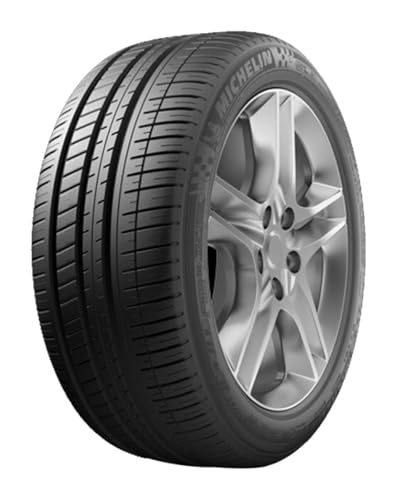
Key specifications revolve around its advanced construction. It featured a variable contact patch 3.0 design, which aimed to optimize the pressure distribution across the tread for more consistent grip under cornering, braking, and acceleration. The tread compound utilized Michelin’s proprietary Helio technology at the time, and the asymmetric tread pattern was engineered with numerous lateral and longitudinal grooves to efficiently evacuate water. It was a tire that brought track-derived technology to the street in a polished package.
See Full Details on Amazon
Key Features & Performance
Driving on the Michelin Pilot Sport 3 was an exercise in confidence. The tire communicated its intentions clearly and provided a level of performance that felt accessible, not intimidating. In my experience, it elevated the character of every car it was fitted to, making good cars great and great cars even more special. Compared to its contemporaries when it was new, it often had an edge in wet weather performance and refinement, setting it apart from more single-minded, track-focused rivals.
Variable Contact Patch 3.0 & Asymmetric Tread Design
This was the core technological boast of the PS3. The idea was to create a contact patch that adapted its shape under load to maintain optimal pressure distribution. In practice, this translated to remarkably consistent grip. When cornering hard, the tire felt planted and stable, with a gradual and communicative transition towards the limit rather than a sudden breakaway. The asymmetric tread played a crucial role here, with a stiffer outer shoulder for dry cornering support and an inner section packed with grooves for water evacuation. The steering felt direct and linear, with a satisfying weight and feedback that told you exactly what the front tires were doing.
Helio Compound Technology & Dry/Wet Grip
Michelin’s use of a silica-based compound enhanced with what they called “Helio” technology was aimed at a broad performance window. The dry grip was, as expected, tenacious. Braking distances from high speeds were impressively short, and acceleration traction, even in powerful front-wheel-drive cars, was markedly improved over lesser tires. The real surprise for many was the wet performance. The PS3 resisted aquaplaning brilliantly, cutting through standing water with authority. Wet cornering grip was a standout feature, inspiring confidence on soaked roads where other performance tires would begin to feel nervous and vague.
Ride Comfort and Noise Refinement
This is where the Pilot Sport 3 often won over buyers comparing it to other max performance tires. For its level of capability, it was exceptionally quiet and compliant. Road noise suppression was a strong point, making long highway journeys far less fatiguing than on some rivals. The ride quality managed to be firm enough to provide crisp handling responses but supple enough to absorb smaller imperfections without crashing or jostling the cabin. This duality of character—being both a fierce performer and a civilized cruiser—was perhaps its most defining and praised trait.
Comparison to Successors and Competitors
It’s important to view the PS3 in context. Compared to its successor, the Pilot Sport 4 S, the newer tire offers improvements in virtually every metric, particularly in wet grip and tread wear, as one would expect from a decade of tire development. Against its direct contemporaries from its heyday, like the Continental ExtremeContact DW or the Bridgestone Potenza RE760 Sport, the PS3 frequently held an advantage in wet braking and overall refinement, while trading blows in dry handling. Its balance was its selling point; it rarely finished last in any single test category and often topped the charts in rain performance.
Buy Now on Amazon
Final Verdict
The Michelin Pilot Sport 3 is a tire that earned its legendary status. It represented a high-water mark for balanced, all-around performance during its production run. For drivers looking to understand the pedigree of the Pilot Sport line or seeking a proven performance upgrade for a vehicle of that era, it remains a compelling study in engineering excellence. It proved that a tire could be thrilling without being punishing, and capable without being specialized.
I recommend the Michelin Pilot Sport 3 primarily to owners of performance vehicles who prioritize a balanced driving experience. It is an excellent choice for the enthusiast who drives their car year-round in climates with distinct seasons, but who can store the tires for winter. It is perfect for someone who values sharp handling and feedback but also has to live with the tire on daily commutes and longer trips.
Pros
- Superlative wet weather performance that inspires confidence in rain.
- Excellent dry grip with predictable and communicative handling at the limit.
- Refined ride quality and low noise levels for the performance category.
- Precise steering response that enhances driver connection to the road.
- Strong reputation for quality and consistency from a leading manufacturer.
Cons
- Not a contemporary tire; newer generations offer measurable improvements.
- Tread life is oriented toward performance, not longevity.
- Absolutely not suitable for cold, icy, or snowy conditions.
- Can be outperformed in pure dry grip by more track-focused rivals.
Who should look elsewhere? Drivers in regions with cold winters who need a single tire solution should consider all-season or dedicated winter tires. Those whose sole focus is maximizing tread life may find other options. And finally, drivers of the latest supercars or those who frequently visit track days will benefit from the advancements in modern ultra-high-performance or track-day tires. For everyone else seeking a masterclass in balanced performance from a defining tire of its era, the Pilot Sport 3’s legacy is well-deserved.